Company news
Hospital Medical Clinic Self Service Health Check Kiosk: Building a New Ecosystem of "Online + Offline" Smart Healthcare Services
In the current era of rapid digital healthcare penetration, the Hospital Medical Clinic Self Service Health Check Kiosk, as a core carrier connecting primary healthcare with remote resources, is reshaping health service processes across multiple scenarios, including community health centers, hospitals, communities, and nursing homes, through an integrated online and offline model. This device not only integrates basic testing, data storage, and remote consultation functions, but also, with its innovative design of "data interconnection + service closed loop," has become a key tool for addressing the uneven distribution of medical resources and improving the efficiency of primary healthcare management.
In community health centers, the Hospital Medical Clinic Self Service Health Check Kiosk acts as a "health gatekeeper." After residents complete basic tests such as blood pressure, blood sugar, and electrocardiograms using the kiosk, the data is uploaded to a cloud platform in real time. Doctors can view the results and issue electronic prescriptions through the online system, achieving a seamless online-offline connection between "testing-diagnosis-medication." For example, after a community health center in Shenzhen introduced the integrated health kiosk, the follow-up efficiency for patients with chronic diseases increased by 40%, and patient satisfaction increased by 25% compared to the traditional service model. This "offline testing + online consultation" model reduces the time cost for patients to travel to and from hospitals and allows high-quality medical resources to reach the "last mile" of the community.
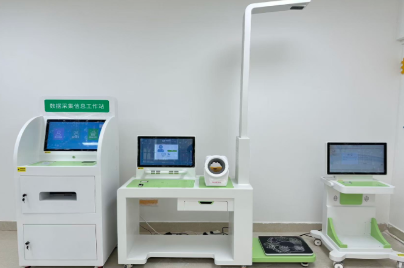
In hospital settings, health kiosks have become crucial auxiliary tools for emergency triage and chronic disease management. In the emergency room of a top-tier hospital, patients can quickly complete basic vital sign checks using the kiosk, with the data synchronized to the hospital's information system, helping doctors prioritize their conditions before admission. In chronic disease management clinics, patients regularly upload their test data via the kiosk, allowing doctors to adjust treatment plans based on historical records, achieving comprehensive management of "in-hospital treatment + out-of-hospital monitoring." A practice at a top-tier hospital showed that after introducing the health kiosk, the accuracy of emergency triage improved by 15%, and the follow-up visit rate for chronic disease patients decreased by 30%, effectively alleviating the pressure on the hospital.
In community and nursing home settings, the "proactive health" value of health kiosks is further highlighted. Community health service stations use the kiosk to establish resident health records, regularly organize health lectures and screening activities, and residents can independently check test reports and obtain personalized health advice. Nursing homes use the kiosk to provide daily health monitoring for the elderly; when data is abnormal, the system automatically triggers an alert and notifies family members and community doctors, building a full-cycle care system of "prevention-intervention-rehabilitation." A case study from a community in Shanghai shows that the application of Hospital Medical Clinic Self Service Health Check Kiosk has increased the annual physical examination coverage rate for the elderly population from 68% to 92%, and improved the early detection rate of chronic diseases by 50%.
The core advantage of the Hospital Medical Clinic Self Service Health Check Kiosk lies in its data integration capabilities. Health data collected by the device is stored in the cloud using encryption technology. Patients can authorize doctors to access information across institutions, avoiding duplicate examinations. Simultaneously, the accumulated health big data provides support for public health decision-making.
From a technical perspective, the Hospital Medical Clinic Self Service Health Check Kiosk integrates IoT, AI, and 5G technologies. Its AI-assisted diagnostic system can perform preliminary analysis of test data, identify abnormal indicators, and alert to risks. The 5G network ensures the real-time nature and stability of remote consultations, enabling patients in remote areas to enjoy expert consultation services. This "hardware + service" model breaks down time and space limitations, shifting health management from "passive treatment" to "proactive prevention."
It is worth noting that the promotion of Hospital Medical Clinic Self Service Health Check Kiosk requires addressing standardization and data security issues. Currently, equipment models and data interfaces are not standardized across regions, and some grassroots institutions exhibit non-standard operation practices. Simultaneously, the privacy protection of health data requires stricter technical and institutional safeguards. In the future, by establishing a unified national health data standard, strengthening training for grassroots personnel, and improving data encryption mechanisms, the service efficiency of integrated health kiosk will be further enhanced.
As a crucial entry point for smart healthcare, Hospital Medical Clinic Self Service Health Check Kiosk is driving the optimized allocation of medical resources and the upgrading of service models through an innovative path of "online empowerment of offline services and data-driven services." In convenient testing at community health centers, efficient collaboration in hospitals, proactive community management, and intelligent care in nursing homes, integrated health kiosk continues to play the role of a "connector" and "accelerator," providing solid technical support for building a universal health coverage system. With the deepening of digital transformation, integrated health kiosk will become a "health steward" for everyone, making high-quality medical services readily available.
Categories
Latest News
- Integrated Health Machine: Reshaping the Smart Service Ecosystem of TCM Wellness Centers
- Integrated Health Management Kiosk: The Core Engine for Pharmacy Transformation into Smart Health Services
- Blood Bank Self-Check-In Healthcare Medical Kiosks: Innovative Practices and Core Values of Basic Screening
- A New Line of Defense for Campus Health: The Value and Advantages of the Integrated Health Kiosk
- AI Evaluation Self Service Tele-Health & Tele-Medicine Health Kiosk: An Innovative Engine for Insurance Company Marketing and Member Services
Contact Us
Company: Shenzhen Huasheng Medical Technology Co., Ltd.Contact: Miss Wang
Tel: +86 159 8911 4474
WhatsApp 1: +86 177 2472 6642
WhatsApp 2: +86 198 6570 7933
Email: wincywang@hsyil.com
Address: Room 406, Danfeng Technology Building, Building 2, Chaguang Village Industrial Park, Shuguang Community, Xili Street, Nanshan District, Shenzhen
 Tel:
Tel: