Company news
Portable Medical Weight Scale BMI Health Kiosk: Reconstructing a new model for rural healthcare follow-up.
In the rural healthcare service system, follow-up visits to villages are a crucial link in bridging the "last mile" of health services. However, traditional follow-up models often face pain points such as bulky equipment, cumbersome data recording, and insufficient diagnostic accuracy. The emergence of portable health monitoring kiosk offers a new solution to these problems, reshaping the efficiency and quality of primary healthcare services.
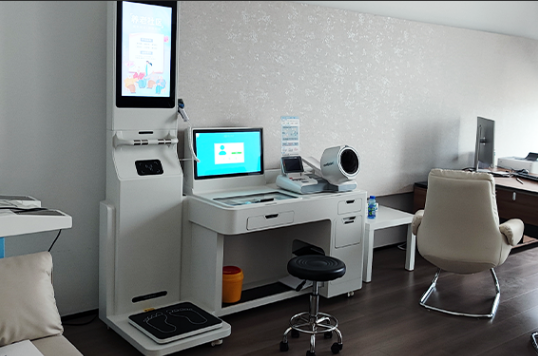
In my country's vast rural areas, medical resources are unevenly distributed, and most village clinics have rudimentary equipment, making it difficult to meet diverse health testing needs. Portable health monitoring kiosks integrate multiple testing functions, including electrocardiogram, blood pressure, blood oxygen, blood glucose, and urinalysis, weighing only 3-5 kg. They are battery-powered and adaptable to rugged rural terrain and unstable power environments. This "one-stop" testing capability allows follow-up doctors to complete a comprehensive screening from basic vital signs to biochemical indicators without carrying multiple devices, significantly improving service radius and coverage efficiency.
For follow-up physicians, the value of Portable health monitoring kiosk lies in three dimensions. First, improved efficiency: traditional handwritten records are time-consuming to organize and prone to errors. Portable health monitoring kiosk automatically collects and stores test data through a built-in intelligent system, supporting Bluetooth synchronization to electronic health records. Doctors can view patients' historical data in real time, enabling dynamic health management. Second, diagnostic assistance: Portable health monitoring kiosk is equipped with AI-assisted diagnostic algorithms, capable of preliminary analysis of ECG, blood glucose, and other test results, providing professional reference for primary care physicians, especially inexperienced young doctors. Finally, extended services: for patients with chronic diseases such as hypertension and diabetes, Portable health monitoring kiosk can generate regular test reports and, combined with a cloud platform, enable remote monitoring, reducing the frequency of hospital visits.
In terms of functionality, Portable health monitoring kiosk typically feature a modular design, allowing for flexible configuration of testing modules according to follow-up needs. For example, specialized functions such as bone density testing for the elderly and height and weight measurement for children can be achieved through expansion modules. Portable health monitoring kiosk also supports offline operation. In remote rural areas with weak network signals, doctors can store data first and then synchronize it to the system upon returning to the clinic, ensuring data continuity. In addition, some high-end models are equipped with high-definition cameras, supporting the sharing of examination images during remote consultations, allowing patients to receive guidance from experts at higher-level hospitals without leaving their villages.
Portable health kiosks play an irreplaceable role in key national healthcare reform initiatives such as poverty alleviation through healthcare, chronic disease management, and family doctor contract services. Data from a county-level primary healthcare service center shows that after equipping these kiosks, doctors' single-visit efficiency increased by 60%, the standardized management rate of chronic disease patients increased by 23%, and patient satisfaction rose from 78% to 94%. These figures demonstrate the significant improvement the equipment brings to primary healthcare services.
With the deepening of the "Healthy China 2030" strategy, portable health kiosks will become standard equipment in primary healthcare institutions. Their lightweight, intelligent, and integrated features not only address the pain points of traditional follow-up models but also promote the downward flow of high-quality medical resources to rural areas. In the future, with the widespread adoption of 5G technology and the Internet of Things, portable health kiosks will also achieve seamless integration with regional medical information platforms, providing solid technical support for building a hierarchical medical system and enabling rural residents to truly enjoy convenient medical services where "minor illnesses are treated in the village, and chronic diseases are managed by someone."
Categories
Latest News
- Integrated Health Machine: Reshaping the Smart Service Ecosystem of TCM Wellness Centers
- Integrated Health Management Kiosk: The Core Engine for Pharmacy Transformation into Smart Health Services
- Blood Bank Self-Check-In Healthcare Medical Kiosks: Innovative Practices and Core Values of Basic Screening
- A New Line of Defense for Campus Health: The Value and Advantages of the Integrated Health Kiosk
- AI Evaluation Self Service Tele-Health & Tele-Medicine Health Kiosk: An Innovative Engine for Insurance Company Marketing and Member Services
Contact Us
Company: Shenzhen Huasheng Medical Technology Co., Ltd.Contact: Miss Wang
Tel: +86 159 8911 4474
WhatsApp 1: +86 177 2472 6642
WhatsApp 2: +86 198 6570 7933
Email: wincywang@hsyil.com
Address: Room 406, Danfeng Technology Building, Building 2, Chaguang Village Industrial Park, Shuguang Community, Xili Street, Nanshan District, Shenzhen
 Tel:
Tel: