Company news
Integrated Health Management Kiosk: The Core Engine for Pharmacy Transformation into Smart Health Services
Driven by the "Healthy China 2030" strategy, pharmacies, as crucial venues for primary healthcare services, are transforming from traditional drug sales terminals into "health management centers." The introduction of integrated health management kiosks endows pharmacies with a full-chain service capability encompassing "prevention-screening-intervention," becoming a key link connecting patients with professional health services.
The integrated health management kiosks are intelligent devices integrating multiple testing functions, typically covering basic health indicators such as height and weight, blood pressure, blood sugar, blood lipids, electrocardiogram, and bone density. In the pharmacy setting, it breaks down the time and space limitations of traditional medical services, allowing consumers to complete basic health screenings while purchasing medication. For example, a hypertensive patient can quickly measure their blood pressure and generate a data report through the integrated health management kiosks when purchasing antihypertensive medication. Pharmacists can then provide medication guidance based on the report, achieving a deep integration of "medicine + service."
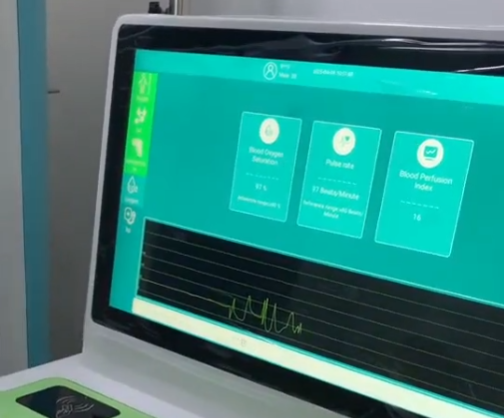
From a technical perspective, the core advantages of integrated health management kiosks lie in their intelligence and convenience. The device's AI algorithm analyzes test data in real time, generates visualized health reports, and synchronizes them to patients' electronic health records via a cloud system. For pharmacies, this not only improves service efficiency but also accumulates valuable user health data, supporting precision marketing and personalized health plan development.
In terms of application scenarios, the health management kiosk can provide differentiated services for different groups. For the elderly, the device supports one-click operation and voice guidance, lowering the barrier to entry; for patients with chronic diseases, it provides regular indicator monitoring and trend analysis to assist in disease management; for sub-healthy individuals, it offers personalized health advice through body composition analysis and traditional Chinese medicine constitution identification. This "personalized service" model makes pharmacies "health stewards" for community residents.
Data security is a key consideration for the promotion of the health management kiosk. High-quality devices typically use blockchain technology to encrypt and store user data, strictly adhering to the requirements of the Personal Information Protection Law to ensure that health information is not leaked or misused. Simultaneously, the device has passed national medical device certification, and the test results have medical reference value, providing pharmacists with professional decision-making basis.
With increasing health awareness among residents, consumers' needs for pharmacies have shifted from simply "being able to buy medicine" to "having access to health solutions." The deployment of integrated health management kiosks is a strategic choice for pharmacies to respond to this demand. It not only expands the service boundaries of pharmacies but also reshapes their role in the health ecosystem—from a drug supplier to a health service provider.
In the future, with the development of the Internet of Things and telemedicine technologies, integrated health management kiosks will achieve interconnection with hospital HIS systems and family doctor platforms, building a closed-loop health service network of "pharmacy-community-hospital." Under this trend, pharmacies that are the first to deploy integrated health management kiosks will gain a competitive edge in the industry, bringing consumers a more convenient and professional health management experience.
Categories
Latest News
- All-in-One Health Kiosk: A Convenient Health Guardian for Community Health Centers
- How do you choose an all-in-one health management kiosk for 2026? Which manufacturers are recommended?
- Integrated Health Machine: Reshaping the Smart Service Ecosystem of TCM Wellness Centers
- Integrated Health Management Kiosk: The Core Engine for Pharmacy Transformation into Smart Health Services
- Blood Bank Self-Check-In Healthcare Medical Kiosks: Innovative Practices and Core Values of Basic Screening
Contact Us
Company: Shenzhen Huasheng Medical Technology Co., Ltd.Contact: Miss Wang
Tel: +86 159 8911 4474
WhatsApp 1: +86 177 2472 6642
WhatsApp 2: +86 198 6570 7933
Email: wincywang@hsyil.com
Address: Room 406, Danfeng Technology Building, Building 2, Chaguang Village Industrial Park, Shuguang Community, Xili Street, Nanshan District, Shenzhen
 Tel:
Tel: