Company news
Huasheng Medical reveals: Six key considerations when purchasing a Self Service Tele-Health Kiosk
With the increasing popularity of modern health management concepts, Self Service Tele-Health Kiosks, as intelligent devices integrating multiple testing functions, have become an important health management tool for families, communities, and medical institutions. Choosing a reliable and well-serviced Self Service Tele-Health Kiosk requires comprehensive consideration from multiple dimensions, including technical parameters, service system, and market qualifications. The following eight key dimensions analyze the core considerations for purchasing a Self Service Tele-Health Kiosk to help you make an informed decision.
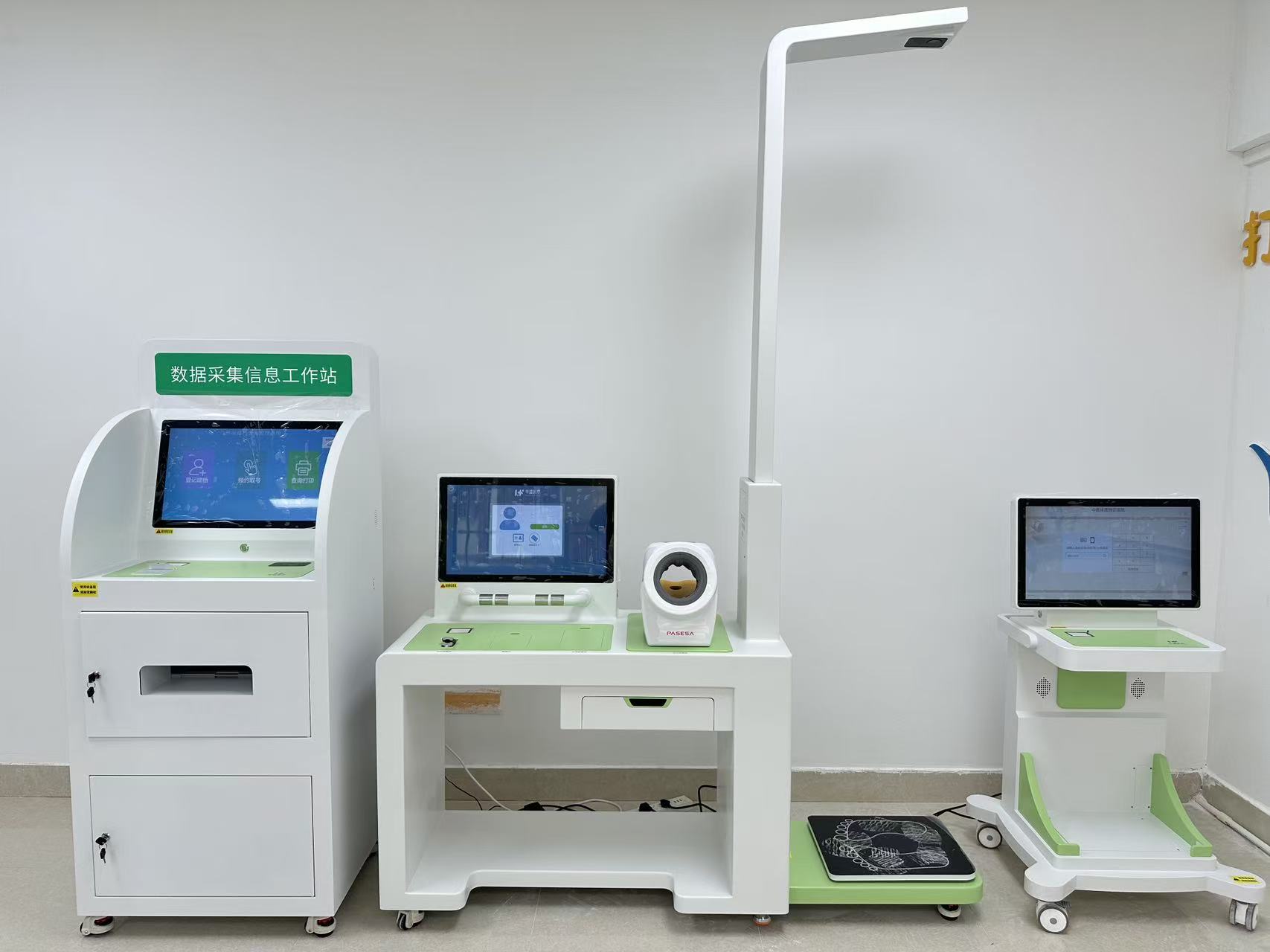
I. Accuracy: The Core Lifeline of a Health Integrated Device
The accuracy of a Self Service Tele-Health Kiosk directly determines the reference value of the test data. A high-quality health integrated device should use high-precision sensors; for example, blood pressure detection should meet international standards (ESH/ISO), and the error range for blood glucose detection should be controlled within ±15%. It is recommended to prioritize devices using blood glucose modules with electrochemical sensing technology and blood lipid analysis components based on light scattering principles to ensure that the test results for indicators such as blood lipids and uric acid are consistent with those of hospital biochemical analyzers by more than 90%. Some high-end Self Service Tele-Health Kiosks will also pass ISO 13485 medical device quality management system certification; their technical compliance can be verified by checking the certification number.
II. Service System: Differentiating After-Sales Capabilities Between Manufacturers and Distributors
When choosing a Self Service Tele-Health Kiosk, it is essential to clarify the supplier's identity—whether it is a direct supply from the manufacturer or a distributor. Manufacturers typically provide more direct technical support, such as a 2-hour response time and a 48-hour on-site repair service commitment, while distributors may have service subcontracting issues leading to delayed responses. You can request a manufacturer's authorization letter and a list of local service outlets. Pay special attention to the warranty period (a ≥1-year warranty for the entire machine is recommended) and the availability of consumables to avoid the Self Service Tele-Health Kiosk becoming idle due to supply shortages of test strips, electrode pads, etc.
III. Functional Matching: Avoid Blindly Pursuing "Comprehensive but Not Specialized" The functional configuration of the Self Service Tele-Health Kiosk needs to be deeply matched with the usage scenario. Home users can focus on basic models (height, weight, blood pressure, blood oxygen, ECG, etc.), while medical institutions need extended models (supporting blood lipids, blood glucose, urine analysis, etc.). Be aware that some low-priced Self Service Tele-Health Kiosks claim to be "multifunctional," but the core detection modules lack accuracy. For example, body fat detection only uses the basic version of bioelectrical impedance analysis, which cannot distinguish between muscle and fat density. It is recommended to list essential functions. For example, the elderly should focus on the arrhythmia warning function, and patients with chronic diseases should confirm whether blood glucose testing supports bloodless technology.
IV. Data Security: The Hidden Red Line of Self Service Tele-Health Kiosks With the intelligent upgrade of Self Service Tele-Health Kiosks, data security has become a critical consideration. Compliant devices should meet the requirements of the Personal Information Protection Law and have features such as encrypted data transmission (SSL/TLS protocol), local storage encryption, and hierarchical user access control. Avoid choosing products without privacy protection certification, and be especially wary of Self Service Tele-Health Kiosks that force users to enable data sharing permissions. You can verify the integrity of security functions by checking the "Data Management" module in the device settings.
V. User-Friendliness: Lowering the Barrier to Use
The ease of use of a Self Service Tele-Health Kiosk directly impacts usage frequency. High-quality devices should be equipped with a ≥7-inch high-definition touchscreen, supporting voice navigation (e.g., "Please place your arm into the blood pressure cuff") and multilingual switching. For elderly users, large font display and error correction features are also necessary. On-site testing is recommended: users over 60 years old should be able to independently complete the entire process from power-on to report retrieval within ≤3 minutes. Complex operation steps (e.g., blood glucose test strip calibration) should be accompanied by animated demonstrations.
VI. Upgrade Capability: Extending the Lifespan of the Self Service Tele-Health Kiosk
In today's rapidly evolving technological landscape, the upgrade capability of a Self Service Tele-Health Kiosk determines its long-term value. Devices supporting modular upgrades allow for the addition of testing items as needed (e.g., adding a bone density module later), and the software should be able to be updated remotely via OTA. It is necessary to confirm whether the manufacturer provides ≥5 years of functional upgrade services to avoid purchasing "disposable equipment"—some low-end Self Service Tele-Health Kiosks face the risk of becoming obsolete after 1-2 years due to motherboard lack of expansion support.
Choosing a Self Service Tele-Health Kiosk is a crucial decision concerning health management efficiency, requiring clear standards in core dimensions such as accuracy, service, and functionality. We recommend prioritizing brands with direct manufacturer certification, high-precision testing modules, and comprehensive after-sales service systems. Simultaneously, consider the balance between functionality and cost based on your actual usage scenarios. A high-quality integrated health device is not only a testing tool but also a reliable partner for long-term health management.
Categories
Latest News
- Integrated Health Machine: Reshaping the Smart Service Ecosystem of TCM Wellness Centers
- Integrated Health Management Kiosk: The Core Engine for Pharmacy Transformation into Smart Health Services
- Blood Bank Self-Check-In Healthcare Medical Kiosks: Innovative Practices and Core Values of Basic Screening
- A New Line of Defense for Campus Health: The Value and Advantages of the Integrated Health Kiosk
- AI Evaluation Self Service Tele-Health & Tele-Medicine Health Kiosk: An Innovative Engine for Insurance Company Marketing and Member Services
Contact Us
Company: Shenzhen Huasheng Medical Technology Co., Ltd.Contact: Miss Wang
Tel: +86 159 8911 4474
WhatsApp 1: +86 177 2472 6642
WhatsApp 2: +86 198 6570 7933
Email: wincywang@hsyil.com
Address: Room 406, Danfeng Technology Building, Building 2, Chaguang Village Industrial Park, Shuguang Community, Xili Street, Nanshan District, Shenzhen
 Tel:
Tel: